

Índice
Strategic preparation beforehand is one of the most decisive factors in performance during a golf course. Analyzing the course methodically makes it possible to anticipate decisions, reduce avoidable mistakes and play each hole with a clear purpose. It is not about playing more aggressively or more conservatively, but about playing coherently with the course design and with the player’s own level.
This article presents a professional approach, based on well-established course management principles, applicable to both amateur golfers and advanced competitive players.
Global analysis of the course before the tournament
Every effective strategy begins with a complete view of the course, not with isolated holes.
Understanding the course design and rhythm
Before focusing on specific shots, it is essential to understand:
- Where the most demanding holes are concentrated.
- Which sections of the course accumulate competitive pressure.
- How par 3s, 4s and 5s are distributed throughout the round.
This analysis allows players to plan energy management, concentration and risk throughout the golf tournament, avoiding poorly timed peaks of aggression.
Use of the yardage book and visual references
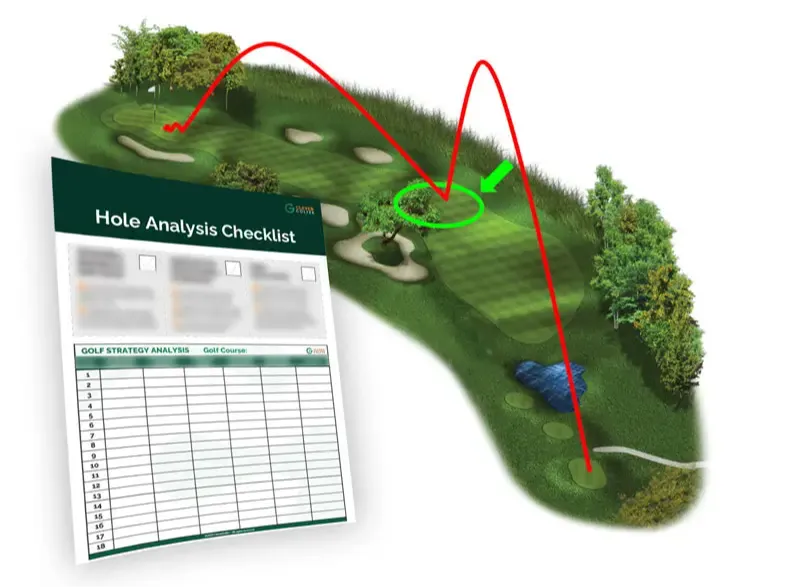
The yardage book is a strategic tool, not a simple informational aid.
Advanced interpretation of distances
Beyond the distance to the center of the green, it is advisable to analyze:
- The real distance to be covered according to the prevailing wind.
- Areas of the green that penalize short or long misses.
- Reliable visual references from the tee and from the fairway.
Well-prepared players do not think about “reaching the green”, but about where to leave the ball for the easiest possible next shot.
Decisions from the tee: strategy versus impulse
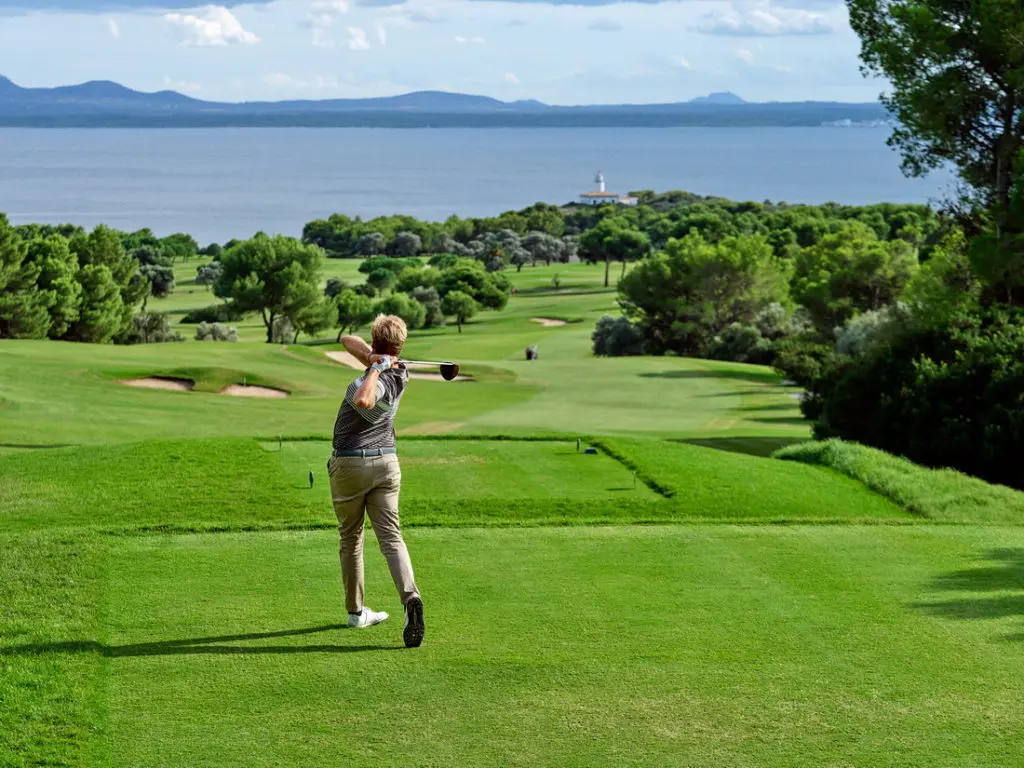
One of the biggest differences between a solid round and an inconsistent one occurs on the tee shot.
Club selection adapted to context
Choosing the driver is not always the optimal option. The decision should be based on:
- The real width of the fairway in the landing area.
- The actual penalty of the rough or lateral hazards.
- The real advantage of gaining distance versus securing position.
Reducing the number of shots played from compromised positions is one of the most direct ways to improve results in a golf tournament.
Approach and green management: minimizing the serious error
Most shots lost in competition do not come from poor swings, but from poor decisions.
Selective attack on the flag
Before each approach shot, it is advisable to evaluate:
- The exact location of the hole on the green.
- The real risks associated with missing short, long or to either side.
- The real probability of leaving the ball at birdie distance.
When the risk outweighs the statistical benefit, playing to the center of the green is a fully competitive decision.
Continuous adaptation during the tournament

The initial strategy is not immutable. A good plan allows adjustments.
- Wind changes compared to practice days.
- Greens faster or firmer than expected.
- Actual feel with specific clubs.
The ability to adapt distinguishes players who maintain performance under competitive pressure.
Frequently asked questions
Should I always play conservatively if my swing feels off?
Not necessarily. Strategy is about probability management. If your swing is inconsistent, increase your margins of error (aim for wider landing areas or the center of the green) while staying fully committed to the chosen shot. The real mistake isn’t a poor swing, but picking a target that leaves no room for error.
How do I decide when to hunt pins and when to play for the center?
A professional rule of thumb is the “Traffic Light” system:
- Green: Short iron in hand, good lie, hazard is far from the pin. Attack.
- Yellow: Mid-iron, bunker protecting the pin. Aim between the pin and the center.
- Red: Long iron/wood, pin tucked near water or OB. Always aim for the center.
How do I adjust if my game plan fails in the first few holes?
Stay calm and identify if the issue is technical or perceptual. If it’s technical, widen your targets. If it’s perceptual, adjust your distance references immediately. Never abandon strategy out of frustration, the plan exists to protect you during “off” days.
Should I use the driver on all par 4s and 5s to be closer?
Modern statistics suggest that distance is an advantage, but only if the ball stays in play. If the driver puts you at risk of a penalty or leaves you without an angle to the green, the smart move is to use a club that guarantees the fairway, even if it means a longer second shot.
How does green firmness affect my approach strategy?
If the greens are very firm (hard), the ball will roll more after impact. In this case, your “landing distance” must be shorter. If you ignore firmness and try to fly the ball all the way to the pin, you’ll consistently end up over the green, facing the toughest recovery shots on the course.
What should I do if my game plan isn’t working in the first few holes?
Stay calm and analyze whether the failure is technical or a matter of reading the conditions.
- If it’s technical: Be more conservative with your targets.
- If it’s reading: Adjust your yardage references immediately. Never abandon your strategy out of frustration; the plan is there to protect you during the rough patches.
Preparing a strategy before competing does not guarantee a specific result, but it does reduce the likelihood of serious mistakes and impulsive decisions. In any golf tournament, the player who understands the course, accepts their limits and manages risk with sound judgment competes with a real advantage.
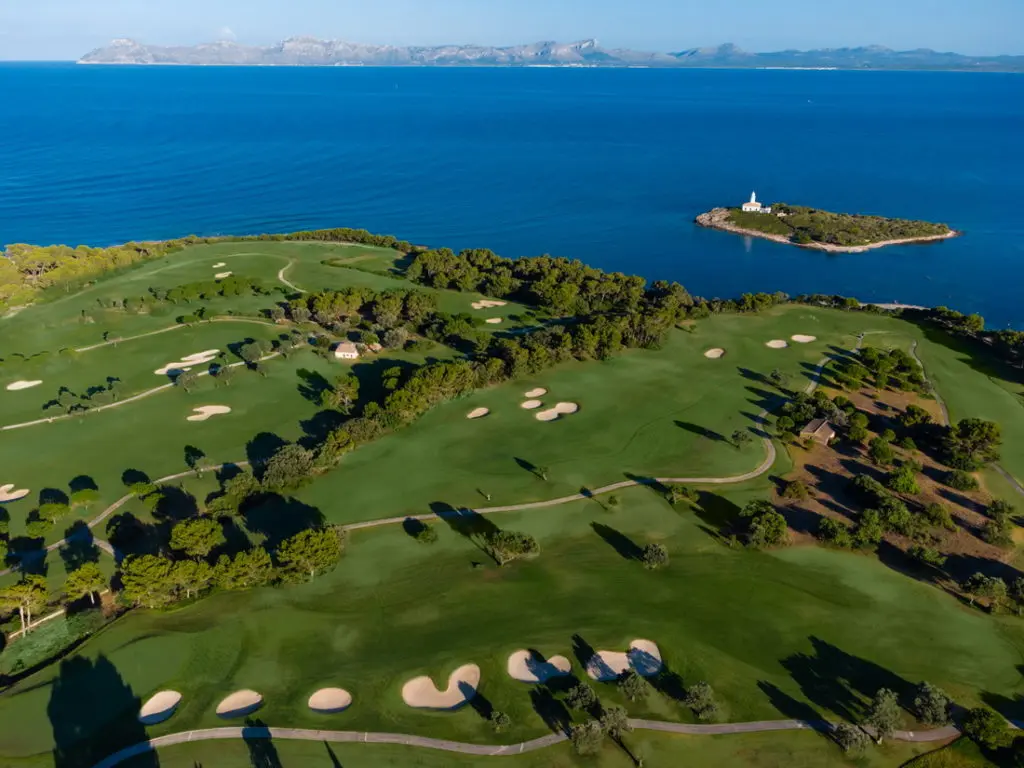
Strategic preparation does not replace technical training, but it enhances it. And in competition, that difference is usually reflected directly on the scorecard.
At Golf Alcanada we offer the strategic preparation necessary to enhance your technical training.
If you are interested in our professional services, please contact us through our website.
Hole 1 is golf’s ultimate mental challenge; mastering the opening tee shot at Alcanada is key to playing with control.
Doglegs reward strategy as much as precision. Learn how to read the hole, choose the right club, shape fades and draws, and manage risk to take advantage of every bend.
How to play golf intelligently in windy conditions, reducing errors and improving decision-making on open and exposed courses.
Discover why strategic decision-making and terrain adaptation are your best allies for conquering Mallorca’s finest golf course.
The Balearic Golf Federation Celebrates the 2025 Awards in Palma Nearly 300 attendees at an evening of recognition, season review, and institutional tribute Palma, Friday, January 16, 2026 – The Balearic Golf Federation held its 2025 Golf Awards gala last night, Thursday, January 15, at the Palma Congress Palace. The event brought together nearly 300…
With the right adjustments, sea fog can become an ally instead of a challenge on the course.
